For the true soccer fanatic, just watching it on the screen simply isn’t enough. Sure, you’ll catch every game of your favorite – or even despised – teams on TV or live, but when there isn’t a game on, what do you do?
For many, downtime between pro games means time to train for your own soccer exploits – and those future ones of your children or players.
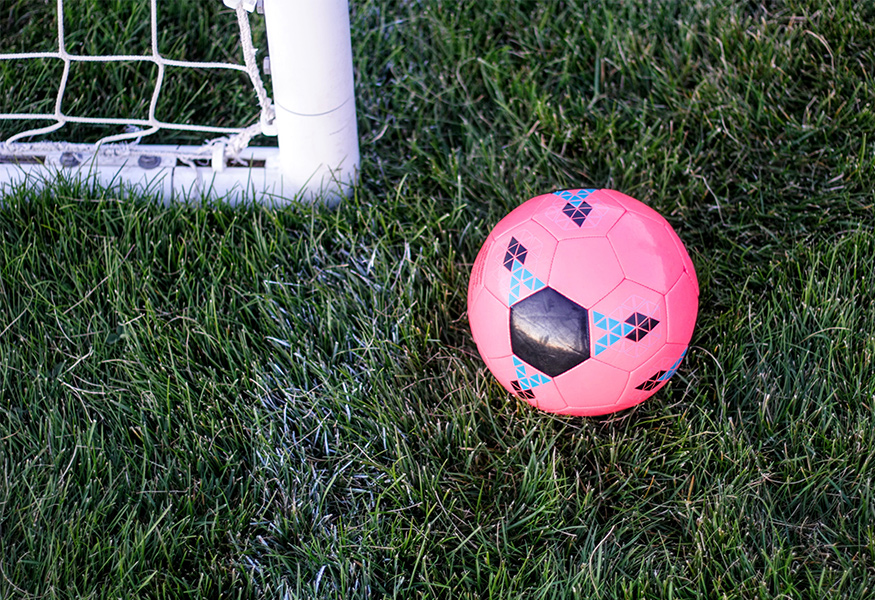
In order to do that though, to really do it the right way, you’ll want a good set of goals. Whether it’s for practice, some quick fun, or a serious neighborhood rivalry, nothing sets the stage as well as a good set of goals. Not all goals are created equal though, so we’ve created this guide to help you navigate the ins and outs of finding and buying the right goal for your needs. Sometimes it’s best to use these soccer goals in your backyard.
Types of Home Soccer Goals
There are three basic kinds of home soccer goals: Freestanding, Socketed, and Fold to Wall. What is Soccer? See here.
Freestanding goals stand upright without having to be sunk into holes or tied to anything. The front posts and crossbar are attached to diagonal poles that run to a rear horizontal pole. This pole is also attached to the base of the posts. A net is attached around the whole structure. We’ve all seen these, and they work pretty well.
Socketed goals are very popular among families that keep the goals up all year long, and don’t need to move them. They feature posts that are sunk into the ground into holes, and set in place using concrete. A crossbar connects the two posts and a net is strung from the posts and crossbar, and often to a mount behind the goal to keep it away from the goalkeeper.
Fold to Wall goals are designed to be very sturdy, but to fold away when the grounds are needed for other sports. They are fixed to hinged arms that extend from the wall or can be pulled up out of the way.
Key Points if Buying a Soccer Goal for Home
1) The Material
The most popular material for most goals is aluminum. This light-weight metal is also quite durable and unlikely to shatter or tear. Steel goals are popular for similar reasons, but they tend to cost more and are heavier – all in exchange for a little more durability. If the goals are more likely to take extra abuse – like kids hanging from the crossbar or climbing on them – then steel is the better way to go. UPVC (plastic) goals are the lightest and most portable, but also the least durable for obvious reasons. They are therefore the best choice for those who need portability, but are not too hard on the equipment.
2) The Size
The FA regulates specific goals for specific age ranges, and your local, state, or national league will do the same. If you are purchasing for a league or club, you’ll want to find a goal of a specific size to suit what they will use in games. Even if you aren’t in a league though, choosing a goal that is most suitable to a young player will avoid unnecessary frustration and will increase everyone’s enjoyment of the game.
Best Home Soccer Goals – Types Reviewed
We’ve reviewed available goals and come up with the top choices in five categories.
For many, soccer is a favorite sport to watch at home, or even to play on weekends. For the serious fan though, there can never be enough. If the only drawback to your vacation time is the lack of a little footie, then you need something portable enough to take along with you.
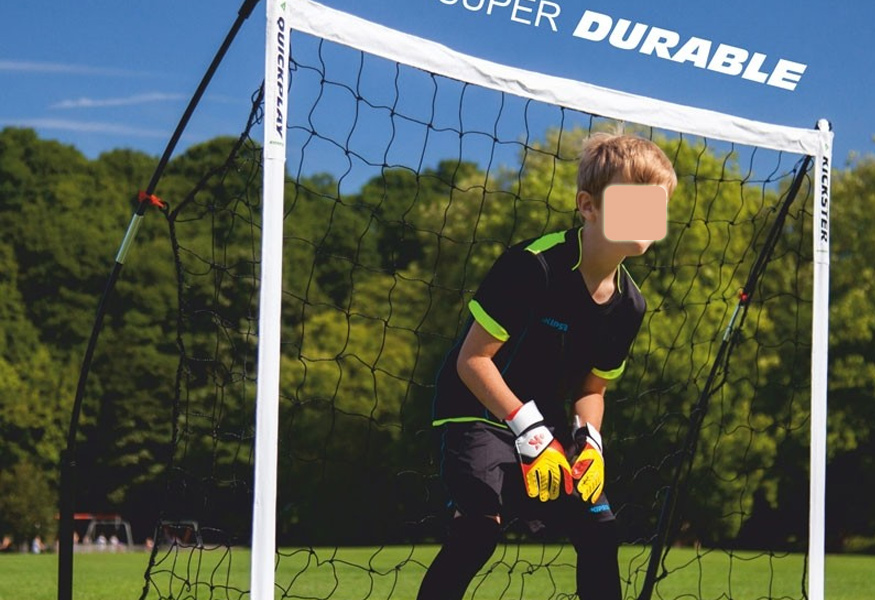
This is the one.
It’s patented Flexi Post design means that it is fast to set up or to take down, fits easily in the trunk or back seat of your car – along with other luggage of course – and can therefore go wherever you go. The pre-attached poles mean there’s no need for instructions when setting it up, pieces don’t get lost or mixed up, and even your kids can have it up and ready before you’ve even finished unloading the car.
Good points:
- Very portable
- Easy to set up and take down
- Can be staked to the ground for stability
Ok OVERALL: 6′ x 4′ FORZA Locking Soccer Goal
One of the few goals that is designed to be left out all year round, this one is understandably one of the most popular back yard goals on the market. It is quick to set up and take down too, which makes it both durable and versatile. The locking system allows it to take a beating and still look like new, and the anti-rot net technology means that the whole unit will last through year of all-round weather and play.
It comes with an optional soccer foal target sheet, for accuracy training or for a simple challenge among friends.
Good points:
- It is durable
- It can be set up or taken down quickly and easily
- Can be left outside all year round
STURDY: Samba Sports Soccer Goal
To ensure a goal that will hold up to rougher, adult-sized play, you need go no further than this Samba Sports Soccer Goal. The 68mm diameter, high-impact UPVC materials are the reason this goal is even used by pro clubs and schools.
Despite the robust nature of it, it is very portable, with set-up or take-down in just a few minutes. The nets, clips and ground anchors – as well as the main structure of course – are weatherproof and suitable to be left out all year round.
Good points:
- Sturdy, stable form and materials
- Weatherproof
- Portable
MINI FOR SMALL BACK YARD: Ultrasport Children’s Plug System Soccer Goal
If your future FIFA star is still pretty little, but you want to engrain that love of the game early on, then this kit is an excellent choice. It’s durable, despite being made for smaller players, and is very easy to set up and take down, so you don’t have to have it up in the yard all the time… unless you want to!
The best part of the solid click mechanism is that you can take down the goal, throw it in the car, and set it up at the beach, the park, or wherever you and your family want to kick the ball around.
Good points:
- Great size for kids
- Very portable – but holds up well!
- Easy to set up and take down
WOODEN Option: Homegoal Wooden Soccer Goal
If you have kids that are likely to swing on your soccer goal – in other words, ‘if you have kids!’ – then it’s not a bad idea to choose a high-quality wooden one. They aren’t really portable, but they stand up well to all kinds of use, from hard shots, collisions, inclement weather, and yes, even to being used as a monkey-bar or lookout post!
Good points:
- Durable construction
- Looks good and can easily be repainted when aging
- 3 year warranty
Final Thoughts
No matter which soccer goal you choose to buy, make sure you thoroughly read the reviews and payment terms and conditions, to ensure it’s the perfect choice for your home.